My kratom addiction and how I overcame it.
The first time I had kratom, I thought I had found the miracle solution to the mental health struggles I had been longing to resolve. It was natural, easily accessible, and I honestly thought I was doing something good for myself. I was able to curb my appetite, sustain my energy, be sociable, and even stopped drinking. But within six months of my first kratom experience, I found myself in a place I wasn’t proud of. I was consuming it every four hours, lying about taking it, feeling agitated and irritable, getting horrible sleep, and my mental health had slowly regressed.
Every time I tried to stop, I JUST COULDN’T DO IT, or at least not for more than 12 hours. I thought I was going to be on kratom forever or lose my mind trying to quit. I finally caved and sought help from my doctor. I asked about Suboxone, but he wouldn’t prescribe it to me. In hindsight, I’m thankful, as it would have been one more thing to try to get off of. He gave me gabapentin instead, which felt useless to me.
That’s when I deep dived into quitting kratom groups and forums to learn about the best supplements to help ease withdrawal symptoms from kratom. I found myself buying $250 worth of supplements and had 12 different bottles of things to take either in the morning, evening, or both.
Around this same time, I discovered the Kratom Sobriety Podcast. I binge-listened to six episodes, and the stories scared me. There was a mom who lost her son to kratom, a successful woman who became $100,000 in debt, and a young man who went from over 200 pounds to 140 pounds.
That night, I went home to my now-husband, broke down, and told him I had a problem with kratom. I told him I wanted to quit but felt like I couldn’t. I had kept it pretty secretive up until this point, or so I thought. He knew I had a problem; I just didn’t know he knew.
Together, we agreed to throw out all of my kratom. That night was rough, and the few days that followed were difficult, but it wasn’t nearly as bad as my previous attempts. This time, I was able to quit for good.
What made the difference?
-
Motivation and hope. The Kratom Sobriety Podcast gave me hope that quitting was possible and motivated me to keep going.
-
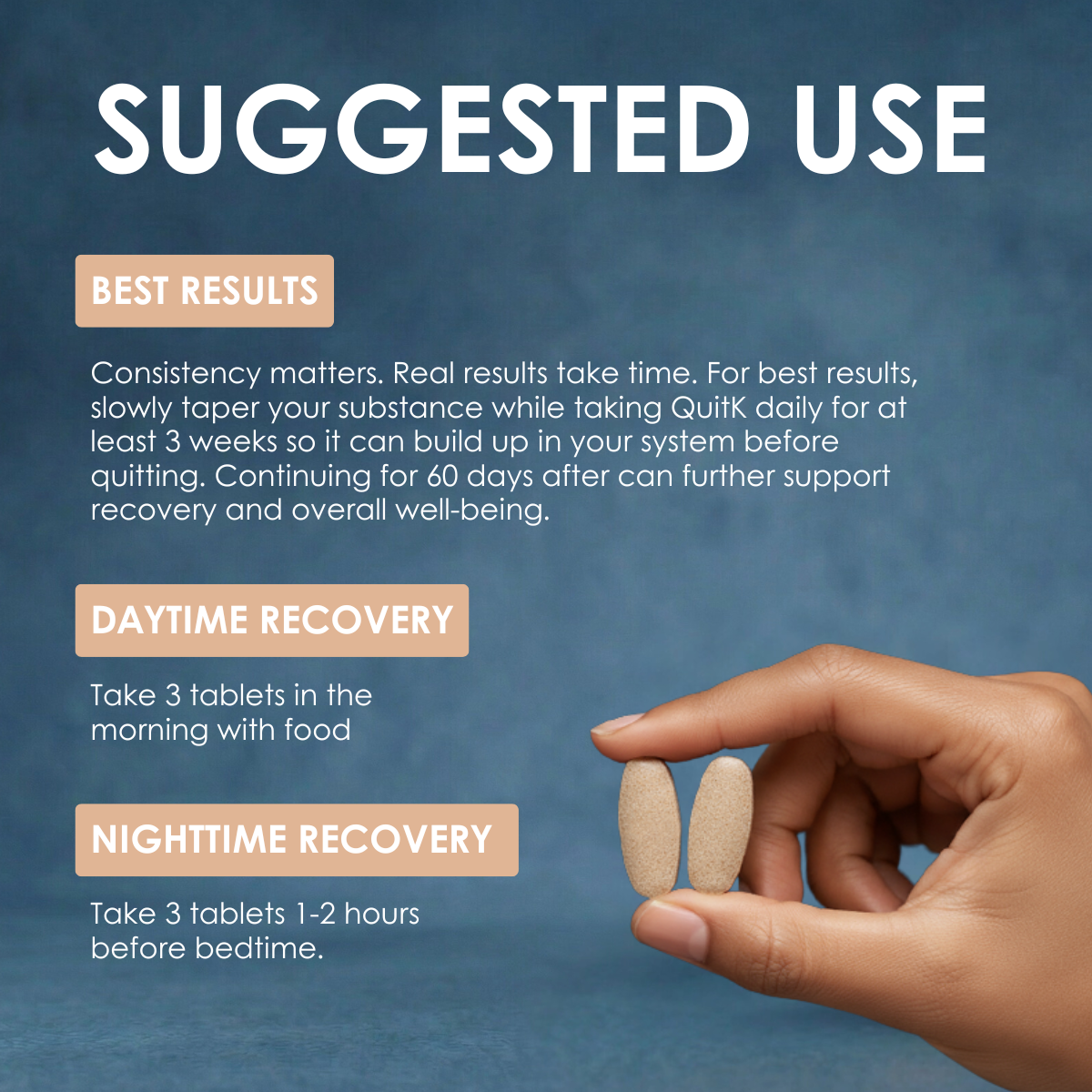
Supporting my body and mind. I focused on giving my body the nutritional support it needed throughout the process. QuitK now exists because it’s what I wish I had when I quit.
-
Telling someone I trusted. Opening up to someone close to me gave me the support and accountability I needed. I didn’t have to keep it a secret anymore.
-
Replacing kratom with healthier habits. I got really into sauna sessions and cold plunges during my quit, and I still do them almost every day.
-
Moving my body and practicing breathwork. Anxiety was a major reason I started taking kratom in the first place. Exercise and slowing down my breathing became healthier ways for me to manage it.
-
Therapy, coaching, and opening up. Talking through the mental struggles I was experiencing instead of trying to numb them with a substance has had a huge impact on my life.
Suffering is a part of life. You don’t need to carry shame or guilt because you found something that temporarily gave you relief. Everyone has their own struggles and coping mechanisms. But if you don’t like where you are, you have the power to start finding your way to the other side.
And if that means asking for help, ask for help. Do whatever healthy, sustainable things you need to do to move away from kratom, 7-OH, or any substance you feel is holding you back from living the life you want. You don’t have to do it alone.
With love, Emily