Recovery Is More Than Quitting - A Note From Emily QuitK’s Founder
One of the hardest truths I've had to accept is that getting clean doesn't magically solve all of your problems.
When I was stuck in my kratom addiction, I convinced myself that if I could just quit, everything would get better. I thought happiness would return. I thought my anxiety would disappear. I thought I'd wake up one day and finally feel free.
Today, I'm over three years free from kratom, and while quitting was one of the best decisions I've ever made, it wasn't the finish line, it was the starting line.
I still struggle.
I still battle anxiety. I still go through seasons where depression creeps in. I still find myself in a funk sometimes, feeling unmotivated, disconnected, or wondering why I don't feel as happy as I thought I would after quitting kratom.
And if I'm being completely honest, there are still days when I have to remind myself that life is worth living without a substance. Days when my mind tries to convince me that going back would somehow make things easier.
But I've learned that's a lie.
The substance was never the solution to my problems; it was the escape from them. Going back wouldn't make life easier; it would only make me less equipped to face it.
Recovery has taught me that freedom isn't about eliminating every bad day. It's about learning how to navigate those bad days without running back to the thing that was holding you captive in the first place.
This reality still frustrates me. I thought freedom meant never struggling again.
What I've come to realize is that freedom isn't the absence of struggle. Freedom is learning how to move through struggle without running back to the thing that was destroying you.
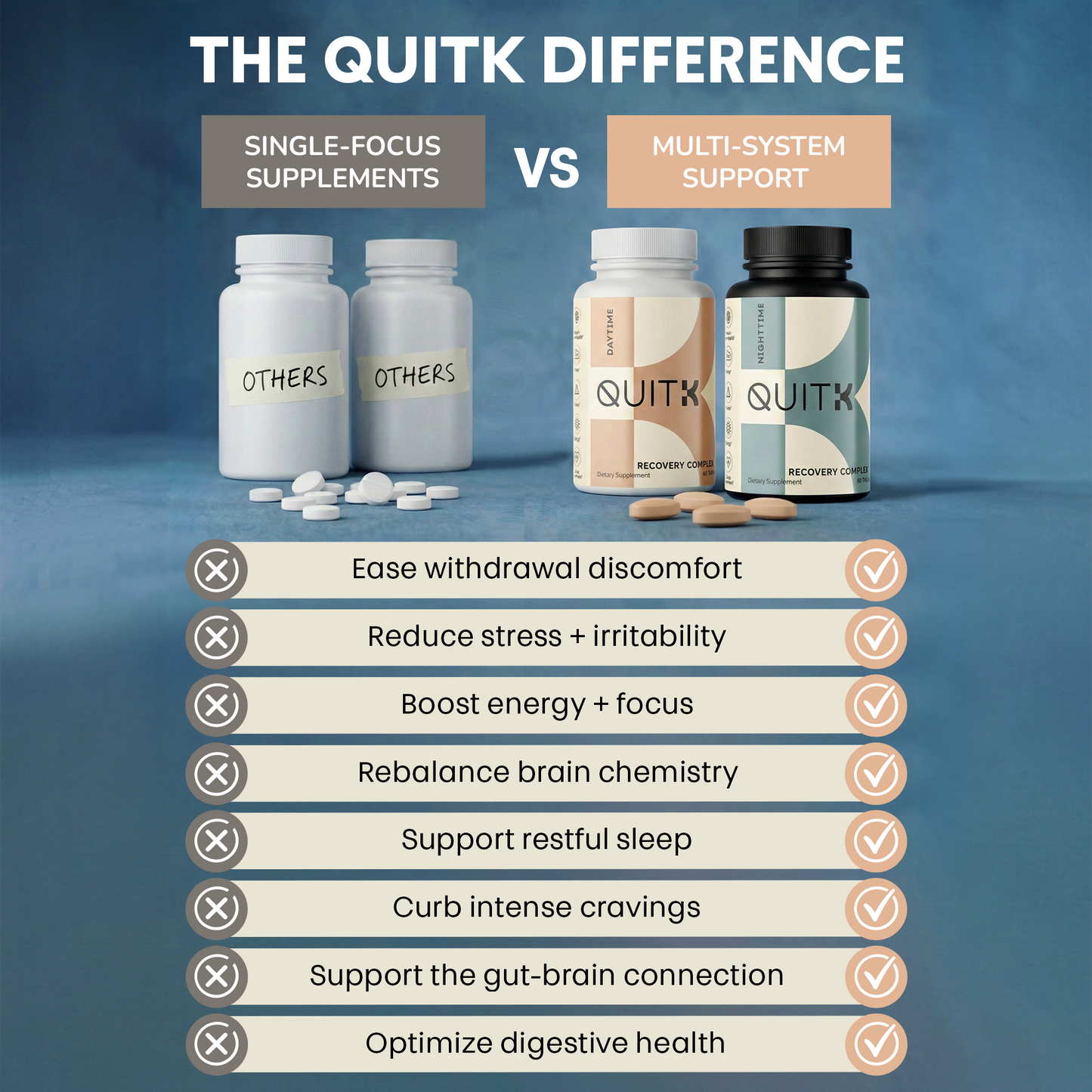
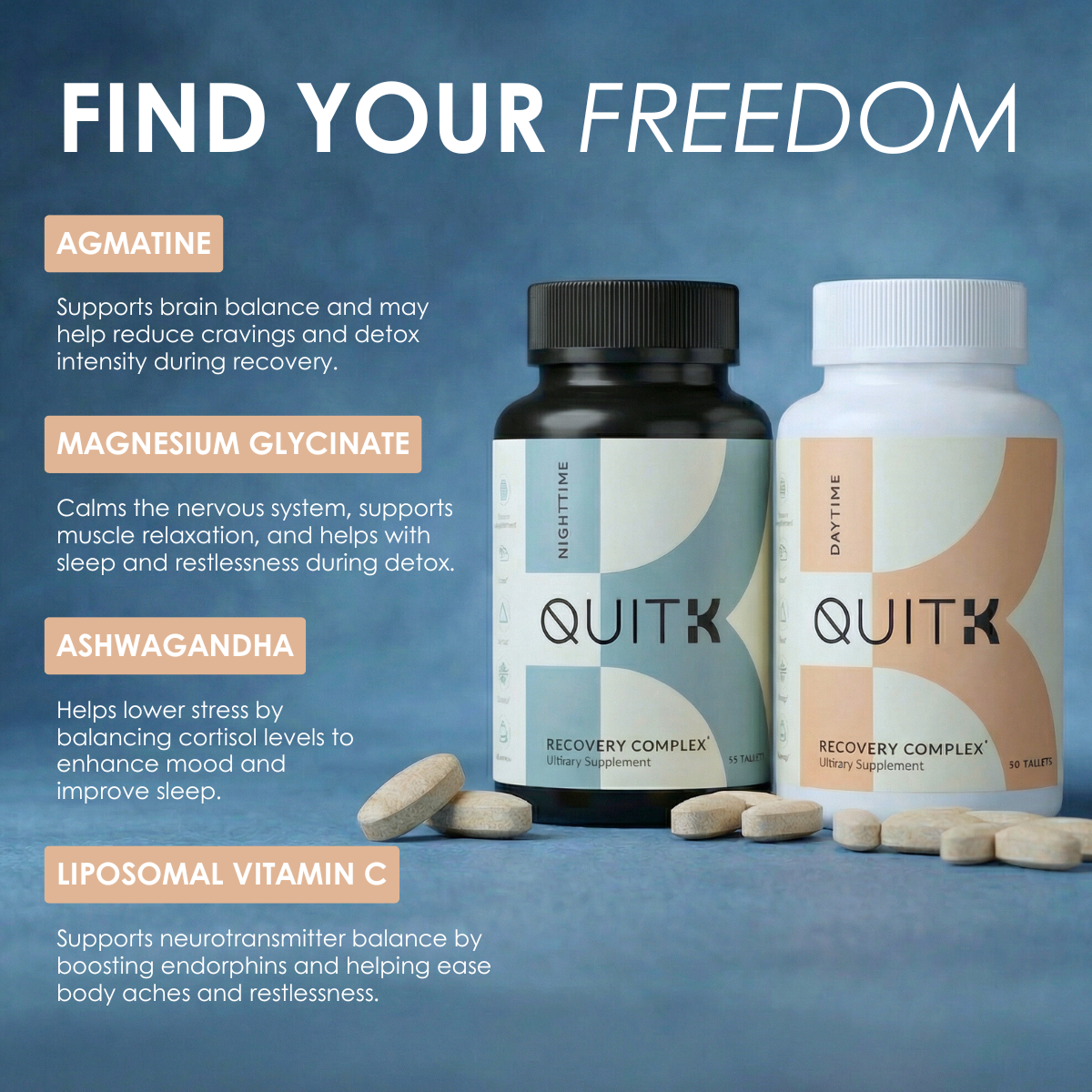
At QuitK, we believe in the power of supplementation. We created QuitK because we know how difficult withdrawal and recovery can be. But I also want to be honest with you:
QuitK is not the answer to all of your problems.
No supplement is. Recovery takes work. It takes time. It takes patience. It takes replacing old habits with new ones and creating a life that's worth staying sober for.
The people I've seen succeed long-term are rarely the people who simply stop using a substance. They're the people who build an entirely new foundation underneath themselves.
For some, that foundation starts with community.
Support groups, AA meetings, NA meetings, and other recovery programs have helped me and millions of people find connection and accountability. The 12 steps aren't just about quitting a substance; they're about learning how to live differently. They're about finding freedom in a deeper sense.
For others, recovery begins with taking care of the body.
After years of substance use, many of us are depleted. Learning to fuel your body with whole foods, adequate protein, hydration, and electrolytes can make an incredible difference in how you feel physically and mentally. It's not glamorous advice, but it's powerful.
Movement matters too.
You don't have to become a marathon runner or spend hours in the gym. You just need an outlet. For some people that's yoga. For others it's running, lifting weights, hiking, biking, or simply taking a walk every day. Exercise has been a way of reminding me that my body is capable of healing and growing stronger.
One of the most valuable tools I've found is journaling.
Not on my phone. Not in an app.
A physical journal.
When you're struggling, it can feel like you're making no progress at all. But when you can flip back through pages from weeks or months ago, you begin to see how far you've actually come. The things that once felt impossible slowly become manageable.
And finally, there's faith.
For me, establishing who God is for me has been a step in my recovery. Maybe you're exploring faith for the first time. Maybe you're reconnecting with beliefs you walked away from years ago. Maybe you're simply asking bigger questions about purpose, meaning, and who you want to become.
Whatever that journey looks like for you, I've found that recovery becomes much more sustainable when we connect to something greater than ourselves.
The reality is that recovery is an uphill climb. Some days you'll feel strong. Some days you'll feel exhausted. Some days you'll wonder if all the effort is worth it.
Keep climbing anyway. Because freedom isn't found in a bottle, a powder, a tablet, or a supplement. Freedom is built one decision at a time.
It's built in the support meetings you attend when you don't feel like going.
It's built in the healthy meals you choose when convenience would be easier.
It's built in the workouts you complete when motivation is nowhere to be found.
It's built in the journal entries nobody else will ever read.
It's built in the prayers you whisper when you feel alone.
QuitK can be part of that journey. We're proud to support people through some of the hardest days of their recovery. But lasting freedom comes from building a life that no longer requires escape.
And if you're struggling right now, know this: You don't have to be perfect. You don't have to have it all figured out. You just have to keep taking the next step.
One day at a time.