Do you take kratom or 7-O to manage chronic pain? From Shoulder Pain to Kratom Addiction: Emily's Journey to Recovery
I had chronic pain in my left shoulder for 4 years. I tried steroid shots, massages, and physical therapy for months with no reprieve. Finally, my physical therapist said, "I don't think there's anything else to do for you, the pain seems to be all in your head." This infuriated me, as I constantly FELT a dull ache in my shoulder.
This was during a messy breakup, though I was still caught in an on-and-off cycle with this toxic person. I constantly felt anxious and/or depressed, and also around the time I began using kratom. What drew me to kratom was how blissful it made me feel, easing my anxiety and despair, all while being "natural" and easily available at the gas station.
I should have known better than buying something to make me feel good at a gas station, but when something gives you reprieve, you deny any negativity bias against it. I started taking more of it, more often, to get the same effect, and soon became highly addicted to it.
After about 6 months of blissfulness on kratom it started to turn on me with severe side effects. I tried quitting multiple times with no success, as the withdrawals and cravings always got the best of me. I began researching opioid use and withdrawal, since kratom essentially acts on the same opioid receptors as heroin, 7-OH, and Suboxone. I quickly learned that the neurotransmitters in my brain were being blocked, causing me severe brain fog, anxiety, irritability, and nausea. On top of everything else, not using it at night was causing a severe drop in dopamine, which led to restless legs and insomnia. Other people may experience psychosis and even seizures from heavy opioid use…thankfully, it never got that far with me.
I knew I had to quit and I finally broke down to my husband to ask for help, and we threw out all of the kratom I had left. I quit cold turkey that day. I suffered intense withdrawal symptoms for a few days but then fell into a deep depression with the worst anxiety I’ve ever had and the pain in my shoulder was back in full force.
The neuroplasticity of my brain had changed, and this is why people experience post-acute withdrawal symptoms (PAWS) after they quit. The brain isn’t producing dopamine, serotonin, and GABA on its own. It’s waiting on a substance to bind to the opioid receptors to reduce pain and create feelings of relaxation and euphoria.
Take a look at the image above created by Psychiatrist Dr. Amen. It shows what a healthy, happy brain looks like and then a brain on certain drugs.
Dr. Amen quotes in his book, “Change your Brain, Change your Life”, We’ve become a nation drowning in medications, yet the rates of anxiety, depression, and chronic pain continue to soar higher than ever before. America is more medicated now than at any point in its history, yet our health crisis is only spreading.” He also states that, “Physical and emotional pain don’t travel on separate pathways in the brain; they are processed by overlapping ones.” This means that when physical pain flares up, emotional pain usually will follow and vice versa.
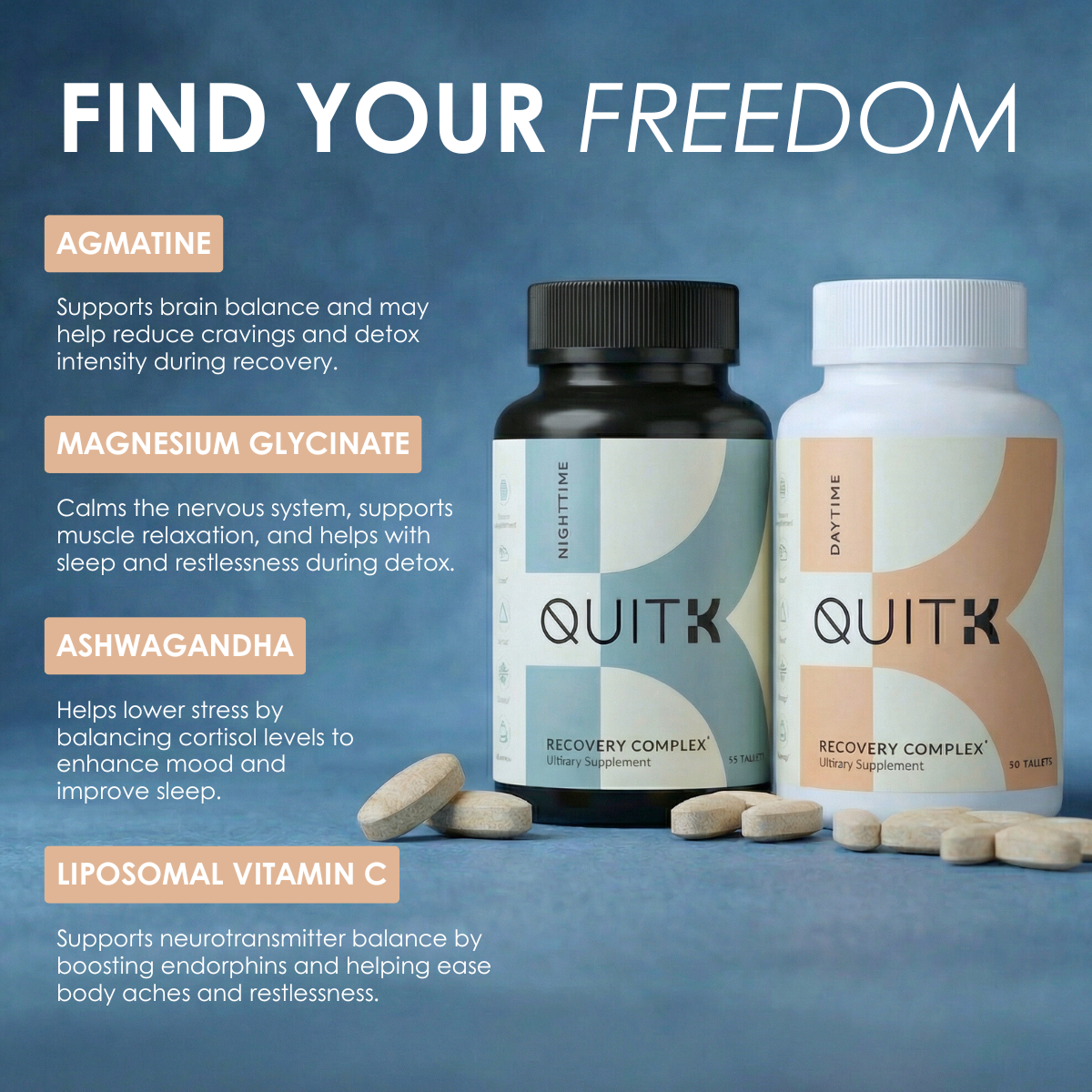
While most psychiatrists are quick to prescribe more and more pharmaceuticals to change the neuroplasticity of our brain back to one of a healthy brain, Dr. Amen takes a different approach with supplementation that doesn’t lead to another dependency or side effects. He has cured thousands of people’s chronic pain, mental health issues, and addictions. The supplements he recommends to achieve healthy brain anatomy are those that help to regulate serotonin, dopamine, and GABA production. Which coincidentally is basis of our QUITK supplementation program. (LEARN NOW)
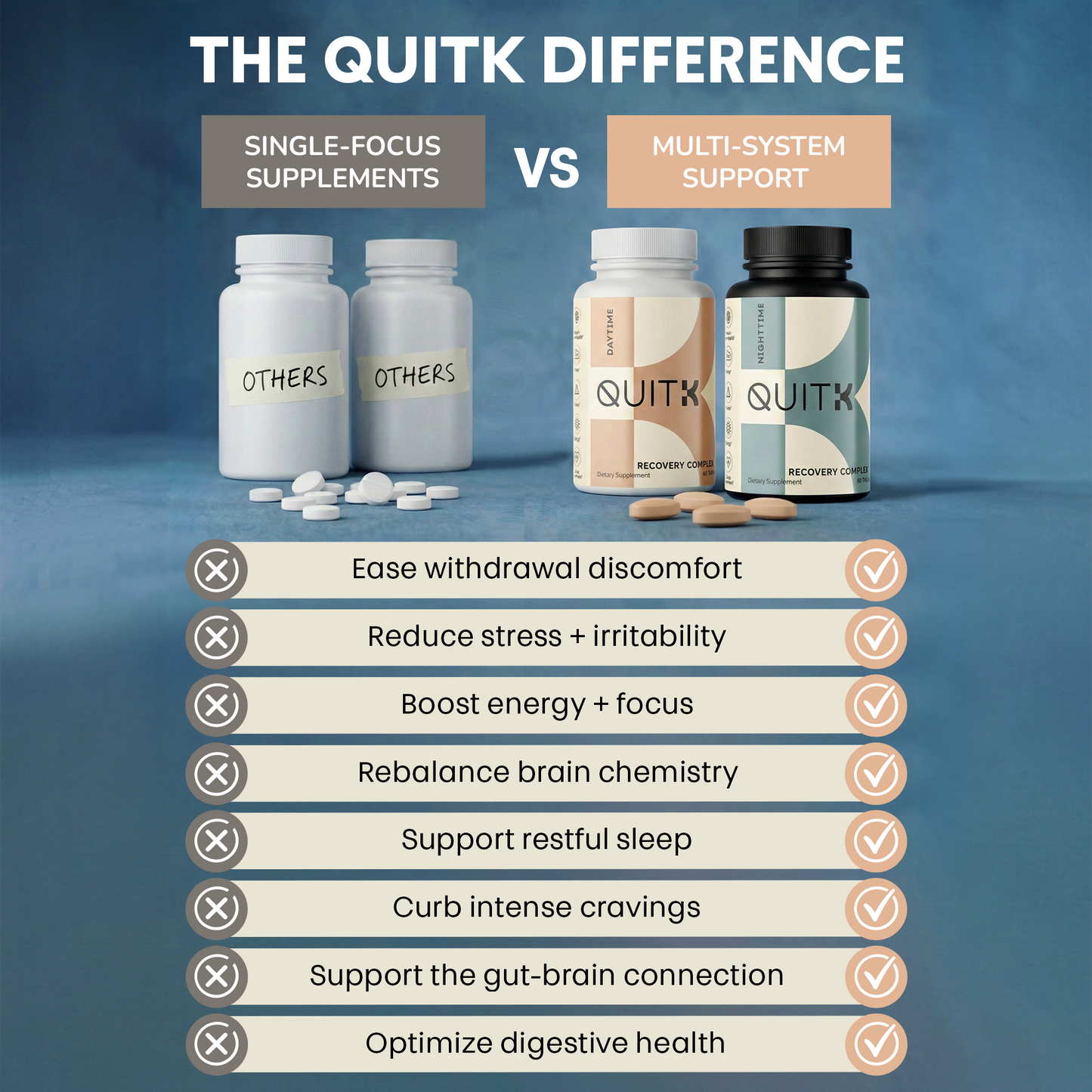
QUITK doesn't stop there - we didn't just want to help people feel better as they quit, we aim to support a full detox, curb cravings, reduce withdrawal symptoms, and improve sleep through the process.
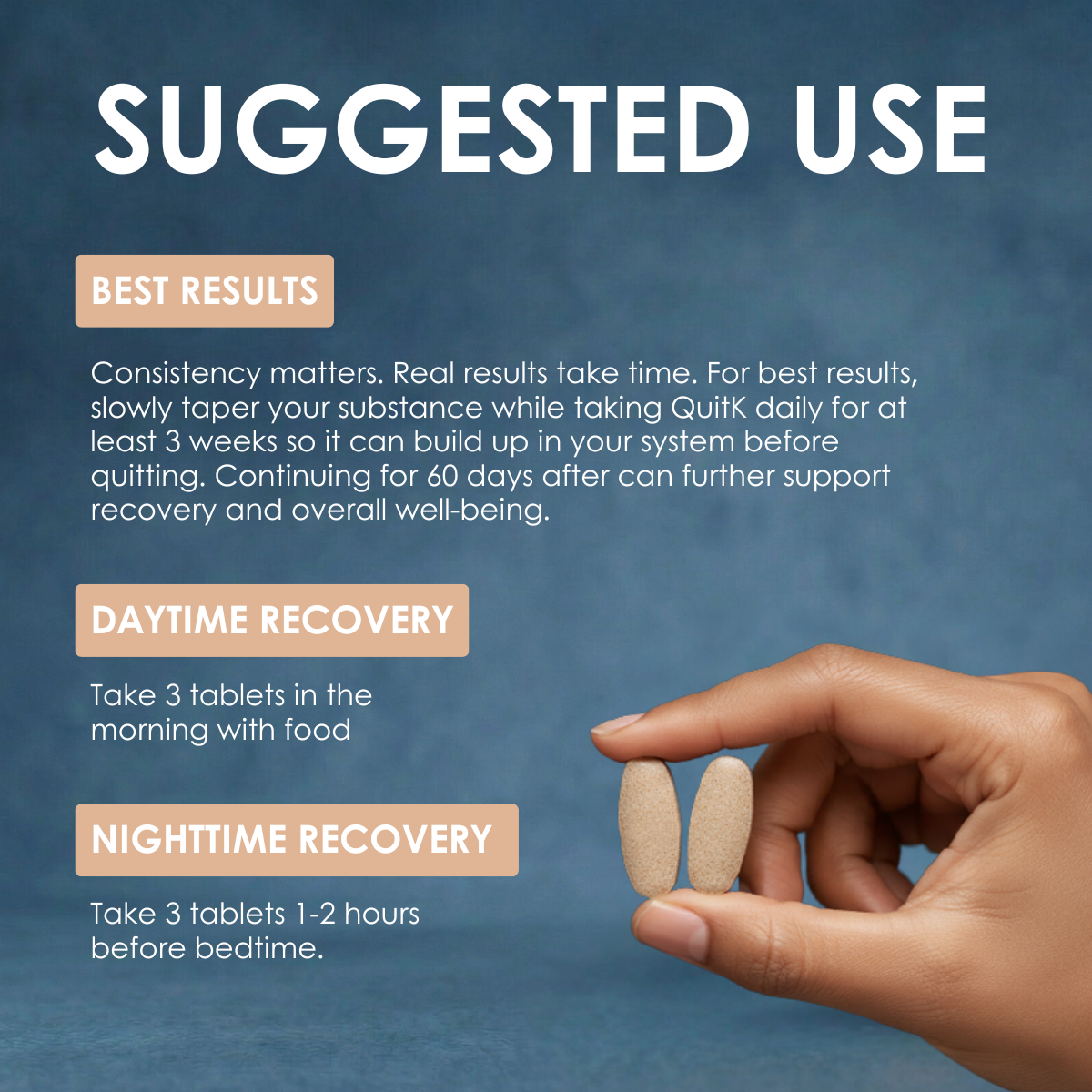
Though, it’s not as simple as taking QuitK once. You have to take it consistently for a few weeks before it can really start to positively affect your brain chemistry. Our recommendation is to take it for at least 3 weeks before you quit and then continue taking it until you start to regain feelings of joy, happiness, contentment, and peace, like those of people with a healthy brain. Trust me, I know you can’t live in a constant state of peace, joy, and happiness, as that’s not the world we live in, but you should and can feel those feelings throughout a day without relying on a substance. That’s the cool thing about our brains is they’re adaptable for better or for worse.
QuitK is here to help you change your life, but YOU also may need to make some lifestyle changes. Avoiding toxins is a big one…it’s clinically proven that aspartame contributes to pain and is found in over 5,000 food products. Avoiding toxins may also mean removing toxic people from your life. I can’t stress enough how important it is to get outside, move your body, eat healthy and drink lots of purified water.
If you want to start the New Year off substance-free and pain-free, then today is the day to order QuitK so your mind and body are prepared for the new life ahead!
Check out some of our products HERE! I wish you all the best of on the other side!
~Emily Beutler
Founder of QuitK
Dr. Amen quotes in his book, “Change your Brain, Change your Life”, We’ve become a nation drowning in medications, yet the rates of anxiety, depression, and chronic pain continue to soar higher than ever before. America is more medicated now than at any point in its history, yet our health crisis is only spreading.” He also states that, “Physical and emotional pain don’t travel on separate pathways in the brain; they are processed by overlapping ones.” This means that when physical pain flares up, emotional pain usually will follow and vice versa.
While most psychiatrists are quick to prescribe more and more pharmaceuticals to change the neuroplasticity of our brain back to one of a healthy brain, Dr. Amen takes a different approach with supplementation that doesn’t lead to another dependency or side effects. He has cured thousands of people’s chronic pain, mental health issues, and addictions. The supplements he recommends to achieve healthy brain anatomy are those that help to regulate serotonin, dopamine, and GABA production. Which coincidentally is basis of our QUITK supplementation program. (LEARN NOW)
QUITK doesn't stop there - we didn't just want to help people feel better as they quit, we aim to support a full detox, curb cravings, reduce withdrawal symptoms, and improve sleep through the process.
Though, it’s not as simple as taking QuitK once. You have to take it consistently for a few weeks before it can really start to positively affect your brain chemistry. Our recommendation is to take it for at least 3 weeks before you quit and then continue taking it until you start to regain feelings of joy, happiness, contentment, and peace, like those of people with a healthy brain. Trust me, I know you can’t live in a constant state of peace, joy, and happiness, as that’s not the world we live in, but you should and can feel those feelings throughout a day without relying on a substance. That’s the cool thing about our brains is they’re adaptable for better or for worse.
QuitK is here to help you change your life, but YOU also may need to make some lifestyle changes. Avoiding toxins is a big one…it’s clinically proven that aspartame contributes to pain and is found in over 5,000 food products. Avoiding toxins may also mean removing toxic people from your life. I can’t stress enough how important it is to get outside, move your body, eat healthy and drink lots of purified water.
If you want to start the New Year off substance-free and pain-free, then today is the day to order QuitK so your mind and body are prepared for the new life ahead!
Check out some of our products HERE! I wish you all the best of on the other side!
~Emily Beutler
Founder of QuitK